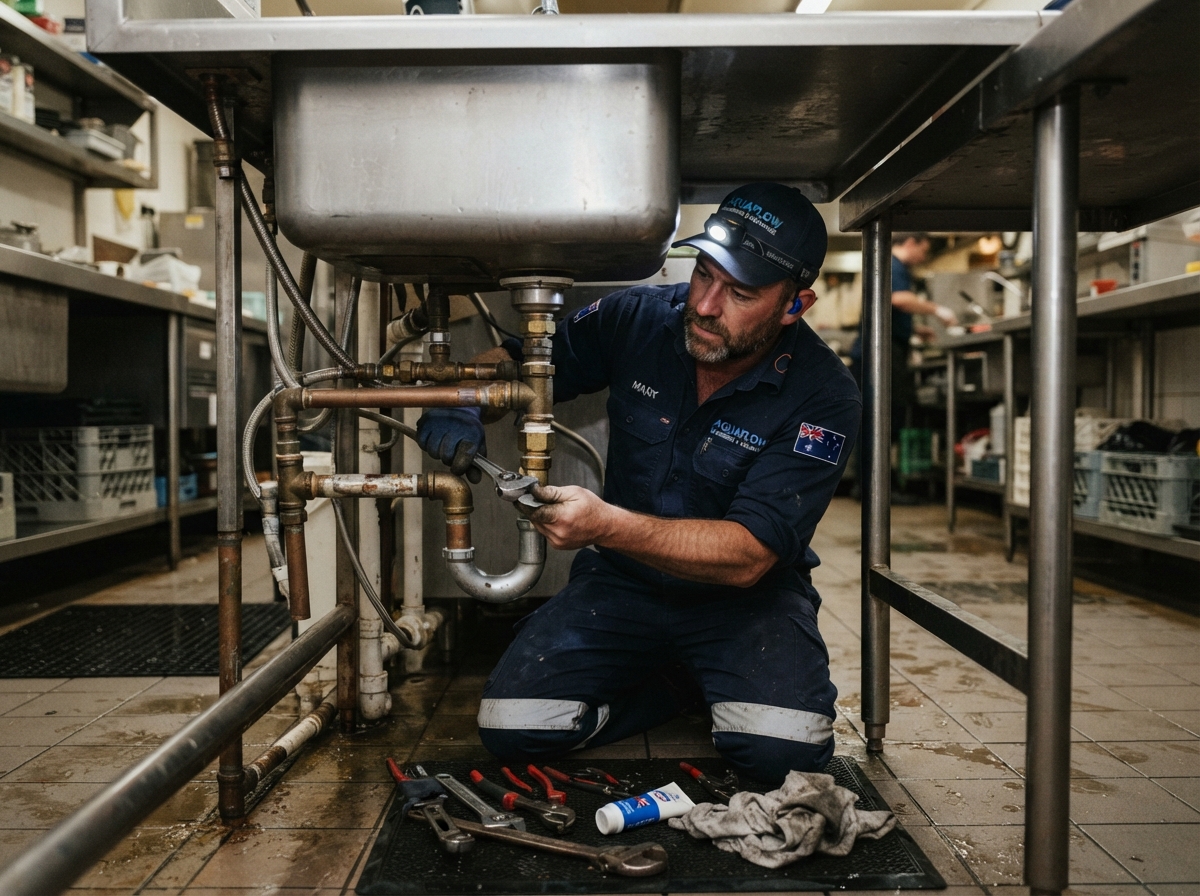
Apartment plumbing can be more complicated than plumbing in a standalone house. Multiple units often share pipework, drainage and sometimes hot water systems — so a problem in one apartment can potentially affect neighbouring units or common areas. A leaking pipe inside a wall on the fifth floor can become a ceiling stain in the fourth. A blocked shared drain can back up into several apartments at once. Understanding how apartment plumbing works, and what to do when something goes wrong, can save Gold Coast apartment owners, tenants and building managers a lot of stress and expense.
The Gold Coast has one of the highest concentrations of apartment, unit and high-rise living in Australia. Suburbs like Southport, Surfers Paradise, Broadbeach, Main Beach, Mermaid Beach and Burleigh Heads are dominated by apartment towers, while Labrador and Biggera Waters have a mix of low-rise unit blocks and townhouses. Whether you own, rent or manage an apartment on the Gold Coast, this guide covers the most common plumbing problems you're likely to encounter — and what to do about them.
Why Apartment Plumbing Can Be Different
In a house, the plumbing is straightforward — your pipes, your drains, your water meter, your shut-off valve. In an apartment building, the picture is more complex. Plumbing is typically split between individual unit infrastructure (fixtures and pipes serving only one apartment) and common property infrastructure (shared drainage, water supply risers, hot water plant and fire services).
This means several things for anyone dealing with an apartment plumbing problem:
- Water isolation may require access to a shared service area, meter room or plant room — not just a valve under a sink.
- A leak in one unit can travel through walls, floors and service ducts to affect units below or adjacent.
- Drainage is often shared, so a blockage in a common drain can affect multiple apartments.
- Hot water may come from an individual unit in the apartment, a centralised building system, or a shared gas system — and the arrangements vary by building.
- Repairs to pipes inside walls, ceilings or service ducts may require coordination with building management or the body corporate.
- Not every apartment building has the same plumbing configuration — age, design and construction method all influence how the system is laid out.
Because of this complexity, diagnosing an apartment plumbing problem can require more investigation than the same problem in a house. The visible symptom (a damp patch on a ceiling, a slow-draining shower) doesn't always tell you where the actual problem is — it could be in your unit, in a neighbouring unit, or in shared building infrastructure.
10 Common Plumbing Problems in Gold Coast Apartments
1. Blocked Drains
Blocked drains are one of the most frequent plumbing callouts in Gold Coast apartments. Bathroom drains, kitchen sinks, showers, toilets and floor wastes can all block up — and because drainage is often shared between units, a blockage in a common drain can affect several apartments at once.
Common causes include hair and soap scum in shower wastes, grease and food in kitchen sinks, and foreign objects in toilets. If a single fixture is slow or blocked, the problem is likely local to that fixture. If multiple drains in your apartment are slow, or neighbouring units are experiencing the same issue, it may indicate a blockage further down the shared drainage line — which usually requires building management involvement.
We use high-pressure water jetting and CCTV drain cameras to clear blockages and identify the underlying cause. See our blocked drain services for more information.
2. Leaking Taps and Toilets
A dripping tap or a running toilet might seem minor, but in an apartment building these problems shouldn't always be ignored. A constantly running toilet can waste hundreds of litres a day, and a leaking tap in a shared bathroom or near a neighbouring unit's wall can cause annoyance and dampness over time.
Common causes include worn seals and washers, faulty inlet or outlet valves, deteriorated O-rings and ageing mixer cartridges. Most tap and toilet leaks are straightforward to repair, but they should be addressed before they worsen — a small drip behind a wall can eventually cause visible damage to your unit or the unit below.
3. Burst or Leaking Pipes
A leaking pipe in an apartment can become serious quickly because water doesn't stay in one place — it travels. Water can move through wall cavities, along the underside of floors, through service ducts and down into ceilings below. A slow leak inside a wall can go unnoticed until it appears as a damp patch, bubbling paint or a stained ceiling in the unit beneath.
If you notice water appearing where it shouldn't — whether it's a visible drip, a wet patch on a wall, or water coming through a ceiling — isolate the water to your unit if you can and call a plumber. In a high-rise, a burst pipe can affect multiple units below within minutes, so fast response matters. Our emergency plumbers are available 24/7 for urgent callouts.
4. Low Water Pressure
Low water pressure is a common complaint in apartment buildings, and the cause isn't always obvious. Possible reasons include:
- A building-level pressure issue affecting multiple units.
- A faulty or partially closed isolation valve in your unit's water supply.
- A blocked or restricted pipe — sometimes caused by mineral build-up or corrosion inside older pipework.
- A malfunctioning pressure-reducing valve (common in high-rise buildings to manage pressure across floors).
- An issue within the individual apartment, such as a blocked showerhead or a faulty mixer.
The cause can't be determined from symptoms alone. If only one fixture has low pressure, the problem is likely local. If every tap in your apartment is affected, or neighbouring units are reporting the same issue, the cause may be in the building's water supply infrastructure. A plumber can investigate and advise whether the issue is within your unit or requires building management attention.
5. Hot Water Problems
Hot water issues in apartments can range from no hot water at all, to inconsistent temperature, to the hot water running out quickly. The approach depends on how your building supplies hot water:
- Individual hot water systems — a storage tank or continuous-flow unit located inside or on the balcony of your apartment. These are your responsibility to repair or replace.
- Centralised or shared hot water systems — a large plant serving multiple or all units in the building, usually maintained by the body corporate or building management.
- Gas hot water — either individual gas units or a shared gas system, which requires a licensed gas plumber for any work.
Don't assume every apartment has an individual hot water unit — many Gold Coast high-rise buildings use centralised systems. If your hot water stops and you're not sure whether the system is yours or shared, check with building management before calling a plumber. For individual systems, we repair, service, replace and install all types — see our hot water services.
6. Toilet Problems
Toilet issues in apartments include constantly running toilets, slow flushing, overflowing, blockages and leaking cisterns. A running toilet is usually caused by a faulty inlet or flush valve — a straightforward repair. A blocked toilet may be a local blockage in your unit's waste pipe, or it could indicate a problem further down the shared drainage line if other fixtures are also slow to drain.
An overflowing toilet — where water or waste is rising and spilling onto the floor — should be treated as a plumbing emergency, particularly in an apartment where the water can quickly reach neighbouring units or common areas. Turn off the toilet's isolation valve (usually on the wall behind the pan) if you can, stop using all fixtures, and call a plumber immediately.
7. Sewer and Drainage Problems
Sewer and drainage issues can be more disruptive in apartments because the drainage system serves multiple units. Warning signs include:
- Multiple drains blocking or running slowly at the same time.
- Unpleasant sewer smells coming from drains, toilets or floor wastes.
- Gurgling sounds from drains when water is used elsewhere.
- Wastewater backing up into showers, basins or floor wastes.
- Slow drainage across several fixtures in your unit.
If multiple fixtures are affected, the problem is likely beyond a single drain and may be in the building's shared sewer line. This usually requires coordination with building management. A CCTV drain inspection can identify whether the issue is a local blockage, a collapsed pipe, or a problem in the shared drainage system.
8. Water Leaks Behind Walls or Ceilings
Hidden leaks are particularly common in apartment buildings, where pipes run inside wall cavities, between floors and through service ducts. Signs to watch for include:
- Damp patches on walls or ceilings that don't dry out.
- Bubbling, peeling or discoloured paint.
- Mould appearing in a specific area, particularly on an external wall or near a bathroom.
- A dripping sound or visible water coming through a ceiling.
- An unexplained increase in your water usage or bill.
If you can see water but can't identify the source, a plumber can use leak detection equipment — including thermal imaging and acoustic listening devices — to pinpoint the leak with minimal disruption. Because leaks in apartments can originate in a neighbouring unit or shared pipework, professional investigation is often necessary. See our leak detection services for more detail.
9. Corrosion and Ageing Pipework
Like any building, apartment plumbing components deteriorate over time. Pipes, fittings, valves and flexible hoses all have a finite lifespan, and older buildings are more likely to have ageing pipework that's susceptible to leaks, corrosion and failure.
The age and type of plumbing system varies considerably between Gold Coast buildings. A 1970s unit block in Labrador will have very different plumbing to a 2020s high-rise in Surfers Paradise. We don't make blanket claims that a particular pipe material is responsible for Gold Coast apartment problems — the reality is that each building needs to be assessed on its own merits. If you're experiencing recurring leaks or pressure issues, a plumber can assess the condition of your pipework and advise whether localised repairs or a broader upgrade is warranted.
10. Plumbing Problems in Shared/Common Areas
Not all apartment plumbing problems originate inside a unit. Issues can also occur in shared and common areas, including:
- Shared bathrooms or amenities in common areas.
- Common drainage lines serving multiple units.
- Basement drainage, sump pumps and car park drainage.
- Plant rooms containing hot water, pumping or fire service equipment.
- Shared hot water systems or centralised water infrastructure.
These problems typically involve building management or body corporate responsibility. If you notice a plumbing issue in a common area — a leaking pipe in a basement car park, a blocked common drain, or a malfunctioning shared hot water system — report it to your building manager or body corporate. We work with strata managers and building managers across the Gold Coast to diagnose and repair common property plumbing issues.
Coastal Conditions and Gold Coast Apartments
Many Gold Coast apartment buildings are located within a few hundred metres of the beach. Coastal environments present additional considerations for building maintenance — exposure to salt-laden air and moisture can affect external fittings, metal components and plumbing fixtures exposed to the elements.
We're not suggesting coastal conditions directly cause every plumbing failure — that would be an oversimplification. But fittings, fixtures and external plumbing components in beachfront buildings may require more frequent inspection and maintenance than those in sheltered inland properties. If you live in a beachfront apartment in Surfers Paradise, Broadbeach or Main Beach and you've noticed corrosion on taps, showerheads or exposed pipework, it's worth having a plumber assess the condition of those components before they fail.
High-Rise Plumbing Problems
Gold Coast high-rise buildings — common in Surfers Paradise, Broadbeach, Southport and Coolangatta — present a specific set of plumbing challenges that low-rise buildings don't face. The vertical nature of the plumbing means water, waste and gases all move through long runs of pipework servicing many units.
Issues that are more common in high-rise buildings include:
- Water pressure variations between floors — higher floors may experience different pressure to lower floors, and pressure-reducing valves are used to manage this.
- Shared drainage stacks — a blockage in a vertical waste pipe can affect multiple units connected to that stack.
- Difficulty accessing plumbing infrastructure inside walls, between floors and in sealed service ducts.
- Water leaks that travel downward through multiple floors before becoming visible.
- The need to coordinate with building management for access to plant rooms, service areas and common pipework.
A plumbing issue on one floor can sometimes have implications elsewhere in the building. A leak inside a wall on level 12 might appear as a ceiling stain on level 11. A blocked waste pipe on a lower floor can cause slow drainage in units above. This is why high-rise plumbing problems often require a plumber who understands how building plumbing systems are connected — and why we work closely with building management to trace and resolve issues efficiently.
What to Do If Your Apartment Has a Plumbing Emergency
If you discover a plumbing emergency in your apartment — a burst pipe, water pouring through a ceiling, an overflowing toilet — act quickly and prioritise safety. Here's what to do:
- Stop using the affected fixture immediately. Don't flush a blocked toilet or run a leaking tap.
- Isolate the water to your unit if you know where the isolation valve is and can reach it safely. If not, contact building management immediately — they can often shut off water to your unit or the building.
- Protect your belongings — move furniture, electronics and valuables away from water if it's safe to enter the area.
- Keep away from electrical hazards. If water has reached power points, appliances or the switchboard, don't enter the area. Don't touch electrical fittings while standing in water.
- Notify building management or the body corporate, particularly if the leak is affecting common areas, neighbouring units, or you can't isolate the water yourself.
- Contact a licensed plumber. Call 1300 000 000 — our emergency plumbers are available 24/7 and we can guide you over the phone while a plumber is on the way.
Who Is Responsible for Plumbing in an Apartment?
This is one of the most common questions we're asked, and the answer depends on where the plumbing issue is located and how the building's plumbing is configured. Responsibility typically falls into three categories:
- Fixtures within the apartment — taps, toilets, sinks, showers and the pipework serving only your unit are generally the owner's (or landlord's) responsibility.
- Pipes serving only one unit — if a pipe carries water or waste to or from your apartment only, it's usually your responsibility, even if it runs through a wall or ceiling.
- Common property plumbing — shared drainage, water supply risers, central hot water systems and pipes serving multiple units are typically the body corporate's responsibility.
Body corporate arrangements and building rules vary, and the line between individual and common property isn't always clear — particularly for pipes that run through walls between units. We don't provide definitive legal advice on body corporate responsibility. If you're unsure who's responsible for a particular plumbing issue, check your building's relevant documentation, speak with your body corporate or property manager, and obtain professional advice where the responsibility is unclear.
Plumbing for Gold Coast Body Corporates and Property Managers
If you manage an apartment building on the Gold Coast — as a body corporate manager, strata manager, property manager or onsite building manager — you need a plumber who can respond to a wide range of issues across one or multiple buildings. Common requirements include:
- Emergency plumbing callouts for burst pipes, major leaks and sewer backups.
- Blocked drain investigation and clearing across individual units and shared drainage.
- Hot water system repairs, servicing and replacement for individual or shared systems.
- Leak investigation in walls, ceilings and between floors.
- Preventative maintenance programs to identify and address issues before they become emergencies.
- Coordination with residents for access, scheduling and communication.
We work with body corporates and property managers across the Gold Coast to provide responsive, reliable plumbing services for apartment buildings. If you manage a building and need a plumber you can rely on, call us to discuss your requirements.
When Should You Call an Emergency Plumber?
Not every plumbing issue needs an emergency callout, but some situations shouldn't wait. Call an emergency plumber immediately if you're dealing with any of the following in an apartment:
- A burst pipe or water gushing from a fitting or pipe.
- A major water leak you can't isolate or contain.
- An overflowing toilet causing flooding.
- Sewage backing up into your apartment.
- A significant ceiling leak — water coming through from above.
- Water entering electrical areas, power points or switchboards.
- Loss of essential water services to your unit.
- A major plumbing failure affecting a business or multiple apartments.
Our emergency plumbers are available 24/7 across the Gold Coast. Call 1300 000 000 any time — we'll help you determine what to do while a plumber is on the way.
Plumbing Problem in Your Gold Coast Apartment?
Whether it's a blocked drain, a leaking pipe, no hot water or an emergency, our licensed plumbers are here to help. Call us now on 1300 000 000 or request a plumber online — we work with apartment owners, tenants, strata managers and building managers across the Gold Coast.
Request a PlumberGold Coast Suburbs With Large Apartment Communities
Apartment living is concentrated in specific Gold Coast suburbs. If you're in one of these areas and need a plumber who understands apartment buildings, we can help. We provide plumbing services to apartment residents and building managers in Southport, Surfers Paradise, Broadbeach, Main Beach, Mermaid Beach, Burleigh Heads, Labrador and Biggera Waters — as well as apartment buildings across the broader Gold Coast.
We're familiar with the plumbing configurations common in Gold Coast apartment buildings, from older low-rise unit blocks to modern high-rise towers. If you need a plumber for your apartment or building, call us or request a plumber online.
Local Apartment Plumbing Experience
We've assisted apartment residents, owners and building managers across the Gold Coast with a wide range of plumbing issues — from individual unit repairs to shared drainage problems and emergency callouts in high-rise buildings. Our plumbers are experienced working in apartment environments, where access is tight, coordination with building management is often required, and a problem in one unit can have implications for others.
Whether it's a blocked drain in a Southport unit, a leaking pipe in a Surfers Paradise high-rise, or a hot water issue in a Broadbeach apartment, we understand how apartment plumbing works and how to resolve problems efficiently with minimal disruption to residents and neighbours. If you're dealing with a plumbing issue in an apartment building, call us to discuss the situation — we'll advise on the best approach.
Frequently Asked Questions: Apartment Plumbing
What are the most common plumbing problems in apartments?
The most common issues are blocked drains, leaking taps and toilets, burst or leaking pipes, low water pressure, hot water problems, toilet issues, sewer and drainage problems, hidden leaks behind walls or ceilings, ageing pipework, and plumbing issues in shared common areas. Many of these are complicated by the fact that multiple units share plumbing infrastructure.
Why do apartment drains keep blocking?
Recurring blockages can be caused by a local issue (hair, grease or foreign objects in a single drain) or a problem further down the shared drainage line. If multiple drains in your apartment are slow, or neighbouring units are experiencing the same issue, the blockage is likely in a shared drain. A CCTV drain inspection can identify the exact cause and location.
Who is responsible for a leaking pipe in an apartment?
It depends on where the pipe is and what it serves. Pipes and fixtures serving only your unit are generally your responsibility. Shared pipes, common drainage and central infrastructure are typically the body corporate's responsibility. If you're unsure, check your building's documentation and speak with your body corporate or property manager. We don't provide definitive legal advice on this.
What should I do if water is leaking through my apartment ceiling?
Water coming through a ceiling is often a sign of a leak in a unit above or in shared pipework. Contact building management immediately — they can help isolate the water and coordinate access to the unit above if needed. Move belongings away from the water, keep clear of electrical fittings, and call a plumber. Don't ignore a ceiling leak — it can worsen quickly.
Why does my apartment have low water pressure?
Low pressure can be caused by a local issue (a blocked showerhead, a faulty mixer, a partially closed isolation valve) or a building-level issue (pressure-reducing valve, shared supply problem). If only one fixture is affected, it's likely local. If all taps have low pressure, or neighbouring units are affected, the cause may be in the building's infrastructure. A plumber can investigate.
Can a plumber fix plumbing problems in high-rise apartments?
Yes. We work in high-rise buildings across the Gold Coast and are experienced with the specific challenges — shared drainage, water pressure systems, access to service areas, and coordination with building management. Some repairs may require building management involvement for access, but most apartment plumbing problems can be diagnosed and repaired by a licensed plumber.
What should I do if my apartment has a burst pipe?
Isolate the water to your unit if you can do so safely. If you can't find the isolation valve, contact building management immediately. Move belongings away from water, keep clear of electrical areas, and call a plumber on 1300 000 000. In a high-rise, a burst pipe can affect units below quickly, so fast response is important.
When is an apartment plumbing problem an emergency?
It's an emergency if water is gushing or flooding, a toilet is overflowing, sewage is backing up, water is coming through a ceiling, water has reached electrical areas, or essential water services are lost. These situations can cause significant damage to your unit and neighbouring units. Call an emergency plumber immediately on 1300 000 000.
Need a Plumber on the Gold Coast?
Call us or request a plumber online — we're here to help with any plumbing issue.
Request a Plumber