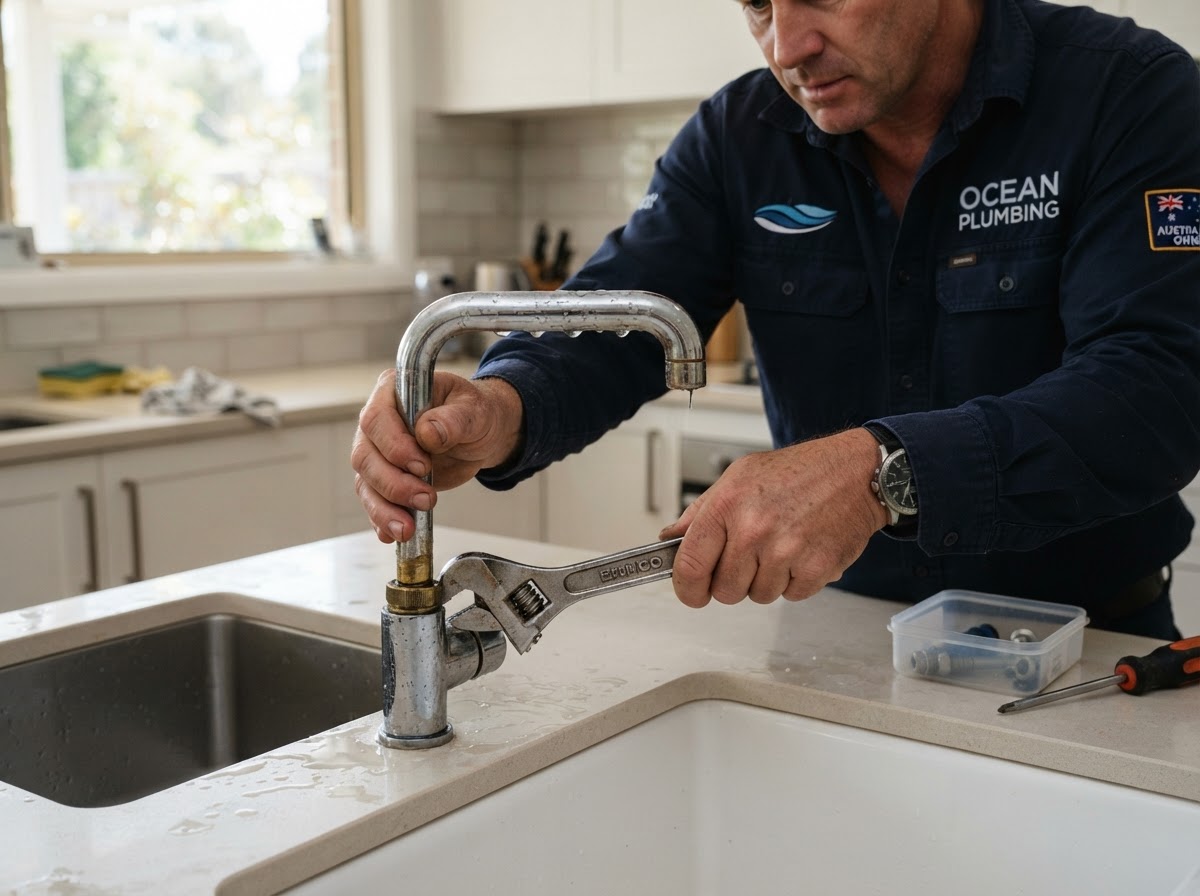
A tap that wobbles when you turn it, a spout that rocks on the sink, or a toilet that shifts slightly when you sit down — these are all signs of loose plumbing fixtures. It might seem like a minor cosmetic issue, but loose fittings are more than just annoying. Movement in a tap or fixture puts stress on the connections and seals behind it, and over time that stress can lead to leaks, water damage and damaged surrounding surfaces.
This guide covers what causes taps, spouts and plumbing fixtures to come loose, the risks of leaving them, when a simple tighten is enough, and when it's time to call a plumber. Whether it's a loose kitchen mixer in a Robina home or a wobbly shower tap in an older Burleigh Heads property, understanding the cause helps you avoid a small fix becoming a bigger repair.
Common Types of Loose Plumbing Fixtures
Loose fittings can affect almost any plumbing fixture. The most common ones we see on the Gold Coast include:
- Wobbly taps — a tap that moves or rocks when turned on or off.
- Loose mixer taps — a mixer tap that spins or lifts at the base where it meets the sink or bench.
- Loose shower fittings — a shower rose or tap set that moves when adjusted.
- Loose spouts — a spout that rocks where it meets the sink, wall or bench.
- Loose toilet components — a toilet that rocks on the floor, a loose cistern, or a wobbly toilet seat.
- Unstable plumbing fixtures — any fixture that moves when it should be firmly fixed in place.
Why Do Taps and Fixtures Come Loose?
Fixtures come loose for a range of reasons. Some are straightforward — a nut has simply backed off over time — while others point to an underlying issue that needs more than a tighten. Common causes include:
- Normal vibration — water flow and daily use vibrate fittings, and over time locking nuts can work loose.
- Worn or perished seals — the rubber or silicone seal between the fitting and the surface hardens, compresses or perishes, allowing movement.
- Inadequate original installation — a fitting that wasn't properly secured during installation may never have been tight enough.
- Thermal expansion — hot and cold cycles cause slight expansion and contraction that can loosen fittings over time.
- Corrosion — particularly in coastal Gold Coast homes, corrosion can degrade the fitting, the nut or the surface it's mounted to.
- Damaged mounting surfaces — a cracked basin, degraded benchtop or rotted timber behind the fitting means the fixing point itself is no longer solid.
- Age — older fittings, particularly in homes with original fixtures, simply wear and loosen over decades of use.
In older Gold Coast homes — particularly beachside properties in suburbs like Palm Beach, Currumbin and Coolangatta — corrosion and aged seals are common contributors. In newer homes and renovations, loose fittings often point to installation issues or surfaces that haven't been properly prepared.
The Risks of Leaving Loose Fittings Unfixed
A loose fitting isn't just a cosmetic issue. Movement in a tap, spout or fixture puts repeated stress on the connections and seals behind it. Over time, this can lead to:
- Damaged seals — movement breaks the waterproof seal between the fitting and the surface, allowing water to seep underneath.
- Leaks at the connection — the supply line or flexi-hose connecting the tap can work loose or crack where it meets the fitting, causing a leak inside the cupboard or wall.
- Damage to benchtops and sinks — a rocking tap or spout can scratch, crack or wear the surface it's mounted to, particularly stone and composite benchtops.
- Damage to tiles and waterproofing — a loose shower fitting can break the silicone seal and allow water behind tiles.
- Cracked fittings — repeated flexing can crack the fitting body itself, particularly plastic or thin-walled components.
- Progressive loosening — a fitting that moves slightly will continue to loosen, making the problem worse over time.
In short, a loose fitting is a slow-motion leak waiting to happen. The cost of tightening or resealing a fitting early is far less than the cost of repairing water damage to a benchtop, cabinet or wall.
Can I Tighten a Loose Tap Myself?
In some cases, yes — but it depends on the fitting and the cause. Here's a sensible guide to what you can safely check and what's best left to a plumber.
When a Simple Tighten May Be Enough
If a mixer tap has simply worked slightly loose over time and the seal underneath is still in good condition, tightening the locking nut underneath can resolve the movement. This usually requires a basin wrench or a spanner and access under the sink. Similarly, a loose toilet seat can often be tightened from above with a screwdriver.
When Professional Repair Is Preferable
A plumber should handle the fitting when:
- The fitting is sealed with silicone or a gasket that needs to be removed and replaced — reusing a perished seal won't hold.
- The locknut is corroded or seized — forcing it can break the fitting.
- The mounting surface is damaged — a cracked basin or degraded benchtop needs repair before the fitting can be properly secured.
- The supply line or flexi-hose needs to be disconnected to access the nut — these can twist and crack if not handled correctly.
- The fitting is a wall-mounted shower set — these are sealed and secured through tiles, and disturbing the seal without resealing can let water behind the wall.
- The movement is caused by a corroded or worn fitting rather than a loose nut — the fitting itself needs replacing.
If you're not confident you can tighten the fitting without damaging the seal, the surface or the supply line, it's better to call a plumber. A loose tap that's over-tightened can crack a basin or strip a thread, turning a simple fix into a much bigger job.
Signs a Loose Fitting Needs Attention
Watch for these signs that a loose fitting is more than just a wobble:
- Water appears around the base of the fitting when it's used.
- The silicone or seal around the fitting is cracked, lifting or missing.
- The fitting moves more than it used to, or the movement is getting worse.
- There's dampness or water staining in the cupboard below a loose tap.
- A toilet rocks on the floor — this can indicate a failed seal or, in some cases, a damaged flange.
- Tiles or grout around a shower fitting are cracked or loose.
What a Plumber Will Check and Repair
When a plumber attends a loose fitting, they'll diagnose the cause and carry out the appropriate repair. This might involve:
- Tightening or replacing the locking nut and re-sealing the fitting with a new gasket or silicone.
- Replacing a corroded or worn fitting that can't be safely re-secured.
- Replacing a perished seal or gasket between the fitting and the surface.
- Re-securing a wall-mounted shower fitting and re-sealing through the tiles.
- Checking and tightening the supply line connection to ensure it's not leaking.
- Re-seating a rocking toilet — removing the toilet, replacing the seal and re-securing the flange.
- Assessing the mounting surface — if the benchtop, basin or wall is damaged, advising on what's needed before the fitting can be properly secured.
Loose Fittings in Gold Coast Properties
On the Gold Coast, the age and location of a property often influence the type of loose-fitting problems we see. Older homes in established suburbs like Southport, Burleigh Heads and Mudgeeraba frequently have original fittings with aged seals and corroded locknuts. Beachside properties from Palm Beach to Coolangatta are exposed to salt air, which can accelerate corrosion of metal fittings and fasteners.
In apartments and high-rise buildings across Surfers Paradise, Broadbeach and Southport, loose fittings in individual units are usually straightforward repairs — but if the fitting is connected to shared plumbing infrastructure, it's worth checking whether the issue is within the lot or relates to common property before arranging repair.
What Happens If You Ignore a Loose Fitting
A loose fitting won't tighten itself. Over time, the movement will worsen and the risks increase:
- Seals fail and water seeps under the fitting into the benchtop, cabinet or wall.
- Supply line connections work loose or crack, causing a leak inside the cabinet or wall cavity.
- The mounting surface is damaged — a cracked basin, rotted timber or degraded benchtop may need repair or replacement.
- A small, inexpensive tighten becomes a larger repair involving water damage, resealing and possibly a new fitting.
Got a Loose Tap or Fixture?
If you have a wobbly tap, loose spout or unstable plumbing fixture that isn't getting better, a professional inspection can help identify the cause before a minor issue becomes a more expensive repair. Call us on 1300 000 000 or request a plumber online — we repair and re-secure loose plumbing fixtures across the Gold Coast.
Request a PlumberFrequently Asked Questions
Why is my tap loose at the base?
A loose tap base is usually caused by a locking nut that has worked loose over time, a worn or perished seal underneath, or corrosion of the fitting. Sometimes the original installation wasn't adequately secured. A plumber can tighten the nut and replace the seal, or replace the fitting if it's corroded.
Can I tighten a loose mixer tap myself?
If the locknut has simply worked loose and the seal is still in good condition, tightening it from underneath with a basin wrench can resolve the movement. If the seal needs replacing, the fitting is corroded, or the supply line needs to be disturbed, it's safer to call a plumber — over-tightening can crack a basin or strip a thread.
Is a loose tap a leak risk?
Yes. Movement in a tap or fixture puts stress on the seals and connections behind it. Over time, the seal can fail and water can seep under the fitting, or the supply line connection can work loose and leak inside the cabinet or wall. It's much cheaper to tighten or reseal a fitting than to repair water damage.
Why does my toilet rock on the floor?
A rocking toilet usually means the seal between the toilet and the floor flange has failed or the flange itself is damaged. It can also indicate that the floor beneath the toilet is no longer solid. A rocking toilet should be re-seated — the toilet is removed, the seal replaced and the flange checked before the toilet is re-secured.
Can a loose shower fitting cause a leak?
Yes. A loose shower rose or tap set can break the silicone seal between the fitting and the tiles, allowing water to penetrate behind the wall. Over time this can cause damage to waterproofing, timber and plaster. The fitting needs to be re-secured and re-sealed.
Do you repair loose fittings in Gold Coast apartments?
Yes. We repair and re-secure loose taps, spouts, shower fittings and toilet fixtures in apartments and units across the Gold Coast. If the fitting is connected to shared plumbing infrastructure, we can advise on whether the repair is within your unit or relates to common property.
How much does it cost to fix a loose tap?
The cost depends on the cause — a simple tighten and reseal is generally straightforward, while a fitting that needs replacing or a mounting surface that needs repair will cost more. We provide clear, upfront pricing before starting any work so you know what to expect.
Need a Plumber on the Gold Coast?
Call us or request a plumber online — we're here to help with any plumbing issue.
Request a Plumber