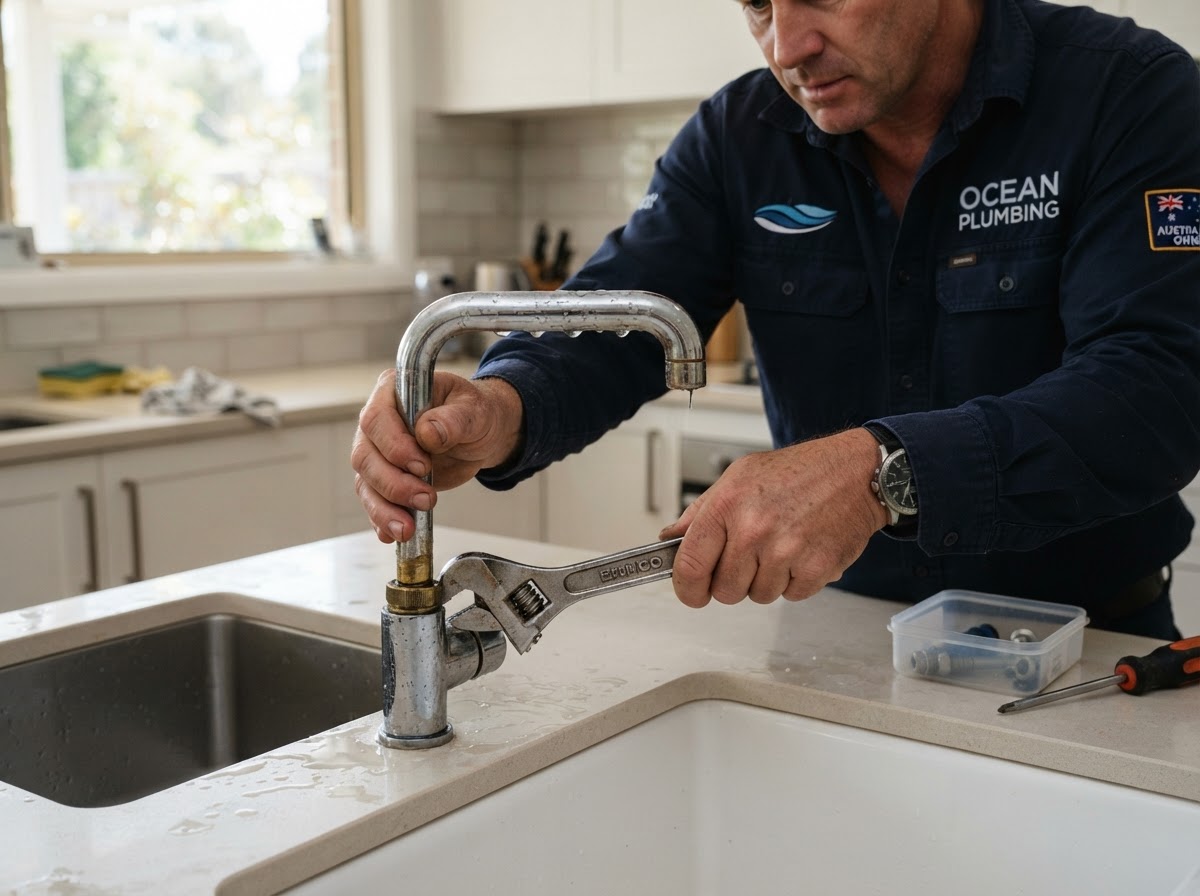
A dripping tap or a slow leak under the sink might seem like a minor annoyance, but even a small constant leak can waste hundreds of litres of water a week and signal a component that's wearing out. Left long enough, a slow leak can progress into a bigger problem — water damage to cabinetry, mould growth, or a fitting that fails entirely and floods the area. The good news is that most leaking plumbing fixtures give you warning signs well before they become an emergency, provided you know what to look for.
This guide covers the most common types of dripping and leaking plumbing in Gold Coast homes and apartments — what causes them, what you can safely check yourself, and when it's time to call a licensed plumber. Whether it's a dripping kitchen tap in a Southport unit or a leaking shower in an older Burleigh Heads home, the underlying causes are usually straightforward once you know where to look.
Common Types of Leaking Plumbing
Leaks don't all behave the same way. Some are obvious — a tap that drips constantly — while others hide behind walls or under floors and only reveal themselves through a higher-than-usual water bill. Here are the most common types of leaking plumbing we see on the Gold Coast.
- Dripping taps — a steady drip from the spout even when the tap is fully closed.
- Leaking mixer taps — water seeping from around the base or handle of a mixer.
- Shower leaks — water escaping from behind the shower wall, around the tap set, or through a cracked shower base.
- Leaking showerheads — a showerhead that drips continuously after the shower is turned off.
- Leaking spouts — water running down the spout body or from the connection point.
- Leaking pipe fittings — slow drips from joints, connections or supply lines under sinks and behind fixtures.
- Leaking toilets — a toilet that runs continuously, refills intermittently, or leaks from the cistern or base.
- Water around plumbing fixtures — unexplained pooling around taps, vanities, toilets or hot water systems.
- Hidden leaks — leaks inside wall cavities, under floors or underground that aren't immediately visible.
What Causes Taps, Showers and Pipes to Leak?
Most leaks come down to worn or deteriorated components. The exact cause depends on the type of fixture and how old it is, but here are the most common culprits:
- Worn washers — the rubber or fibre washer inside a tap wears down over time, letting water past the seat.
- Worn O-rings — small rubber rings that seal moving parts; when they perish, water seeps through.
- Deteriorated cartridges — mixer taps use a ceramic or brass cartridge instead of a washer; these can fail and leak.
- Deteriorated seals — the seals around spouts, shower roses and connections harden and crack with age.
- Corroded fittings — older metal fittings, particularly in coastal Gold Coast homes exposed to salt air, can corrode and weep.
- Damaged connections — supply lines and flexible hoses can develop cracks, splits or loose fittings.
- High water pressure — excessive pressure puts extra load on washers, seals and valves, accelerating wear.
- Loose fittings — a tap or spout that moves slightly can break its seal and start to leak.
In older Gold Coast homes — particularly beachside properties in suburbs like Palm Beach, Currumbin and Coolangatta where salt air is a constant factor — metal fittings and fixtures can corrode faster than they would inland. In high-rise apartments across Surfers Paradise, Broadbeach and Southport, shared plumbing infrastructure means a leak in one unit can sometimes affect neighbouring properties if it's not addressed.
Signs You May Have a Leak
Not every leak is visible. Some build slowly behind walls or under floors, and by the time you notice water damage the leak has been running for weeks. Watch for these signs:
- A tap that drips constantly or won't fully shut off.
- Water pooling around the base of a tap, toilet or vanity.
- Damp, discoloured or bubbling paint on walls near plumbing.
- Mould or a musty smell in a bathroom, laundry or under-sink cupboard.
- A toilet that refills by itself between uses or runs continuously.
- An unexplained increase in your water bill.
- The sound of running water when nothing is turned on.
- Warped or swollen cabinetry under a sink.
- Warm patches on flooring near hot water pipework.
Is It Safe to Leave a Leak?
A slow drip from a tap is unlikely to cause immediate damage, but it's rarely a good idea to simply ignore it. A dripping tap wastes water — a single drip per second can add up to thousands of litres a year — and the worn component causing the drip will continue to deteriorate. What starts as a slow drip can progress to a steady stream, and the longer a worn washer or seal is left, the more likely it is to damage the tap seat itself, turning a simple washer replacement into a more involved repair.
Leaks behind walls, under floors or around fittings are a different matter. These can cause structural damage, mould and timber rot before you even realise they're there. If you notice any of the warning signs above — particularly an unexplained water bill increase, damp patches or the sound of running water — it's worth getting it investigated sooner rather than later.
Simple Checks You Can Do Safely
There are a few safe checks any homeowner can do before calling a plumber. These won't fix the problem, but they'll help you understand what you're dealing with and give the plumber useful information.
- Dry the area completely and check back in an hour — if water reappears, you've confirmed an active leak.
- Check whether the leak stops when the water supply to that fixture is turned off at the isolation valve.
- For a toilet, drop a little food colouring into the cistern and wait 15 minutes without flushing — if colour appears in the bowl, the flush valve or flapper is leaking.
- Check under sinks for dampness, water stains or a musty smell in the cupboard.
- Read your water meter, wait an hour without using any water, then check again — a change suggests a leak somewhere on the property.
These checks help narrow down the source, but they don't replace a professional diagnosis — particularly for leaks you can't see.
When DIY Can Make Things Worse
Some plumbing work is straightforward for a licensed plumber but risky for an untrained homeowner. Attempting the following can cause more damage than the original leak:
- Overtightening a tap or fitting — this can crack ceramic discs, distort O-rings or damage the fixture body.
- Using the wrong replacement part — washers, cartridges and O-rings come in different sizes and materials; the wrong one won't seal properly.
- Forcing a stuck tap or corroded fitting — this can break the fitting or the pipework behind it.
- Opening a wall or floor to find a leak without knowing what's behind it — you can damage other pipes, cables or structures.
- Using sealants or tape as a fix — silicone and thread tape are temporary at best and can hide a worsening problem.
If you're not confident identifying the right part or safely dismantling the fitting, it's better to call a plumber. A leaking tap repair is generally quick and affordable — and far cheaper than replacing a fixture you've damaged trying to fix it yourself.
Is a Dripping Tap Really an Emergency?
In most cases, no. A dripping tap is a routine repair that can be booked within a few days. The distinction matters because emergency callouts are for situations where property or safety is at immediate risk.
However, some leaks do warrant urgent attention. A leak becomes an emergency when:
- Water is flowing freely and can't be contained or isolated.
- Water is entering walls, ceilings or electrical areas.
- A toilet is overflowing or the property has no working toilet.
- A hot water system is leaking significantly.
- The leak is causing visible damage to flooring, cabinetry or walls.
If any of those apply, turn off the water supply if it's safe to do so and call an emergency plumber. For a steady drip that's contained, a standard booking is fine.
What a Plumber Will Check and Repair
When a plumber attends a leaking tap, shower or pipe, they'll diagnose the source, explain what's needed and carry out the repair. Depending on the fixture, this might involve:
- Replacing worn washers, O-rings or cartridges.
- Reseating or resurfacing a damaged tap seat.
- Replacing a faulty toilet flush valve or inlet valve.
- Replacing a cracked or perished supply line or flexible hose.
- Re-sealing a shower base or tap set where the waterproofing has failed.
- Repairing or replacing a section of leaking pipework.
- Using leak detection equipment to locate a hidden leak behind walls or under floors.
For hidden leaks — where water is appearing but the source isn't obvious — a plumber may use thermal imaging or acoustic detection to pinpoint the leak with minimal disruption to walls and floors.
What Happens If You Ignore a Leak
Leaks rarely fix themselves. Over time, an untreated leak can lead to:
- Water damage to cabinetry, skirting, plaster and flooring.
- Mould growth, which can affect indoor air quality and require specialist remediation.
- Timber rot in structural elements that stay damp.
- A higher water bill — sometimes significantly higher if the leak is on the hot water side.
- A small, cheap repair becoming a larger, more expensive one as components deteriorate further.
- In apartments, the potential for water to affect neighbouring units.
Got a Leak That Won't Stop?
If you have a dripping tap, leaking shower or leaking pipe that isn't getting better, a professional inspection can help identify the cause before a minor issue becomes a more expensive repair. Call us on 1300 000 000 or request a plumber online — we service homes and businesses across the Gold Coast.
Request a PlumberFrequently Asked Questions
Why does my tap keep dripping after I turn it off?
A dripping tap is almost always caused by a worn washer, O-ring or cartridge inside the tap. These components create the seal that stops water flow; when they wear out, water gets past. It's a straightforward repair for a plumber — the tap doesn't usually need replacing.
How much water does a dripping tap waste?
A single tap dripping once per second can waste thousands of litres per year. A running toilet can waste even more — sometimes hundreds of litres a day. Over a billing period, that adds up noticeably on your water bill.
Can I fix a leaking tap myself?
If you're confident identifying the correct replacement parts and can safely dismantle and reassemble the tap, a washer or cartridge replacement is within reach for some homeowners. If you're unsure, it's safer to call a plumber — overtightening or using the wrong part can damage the fitting.
Why is my shower leaking through the wall?
Water escaping from behind a shower wall usually means a failed seal around the tap set, a cracked pipe inside the wall, or failed waterproofing behind the tiles. This needs professional diagnosis because the visible leak is often not at the source.
How do I know if I have a hidden water leak?
Common signs of a hidden leak include an unexplained increase in your water bill, damp patches or bubbling paint on walls, a musty smell, the sound of running water when nothing is on, and warm spots on flooring. If you notice any of these, a plumber can use leak detection equipment to find the source.
Is a leaking toilet an emergency?
A toilet that runs continuously or leaks from the cistern is usually a routine repair. However, a toilet that is overflowing, backing up, or is the only toilet in the property and is unusable may need urgent attention. If water is causing damage or the toilet can't be used, call an emergency plumber.
Do you repair leaking taps in Gold Coast apartments?
Yes. We repair leaking taps, mixers, showers and toilets in apartments and units across the Gold Coast, including high-rise buildings in Surfers Paradise, Broadbeach and Southport. For shared plumbing, we can advise on whether the issue is within your unit or relates to common property.
Need a Plumber on the Gold Coast?
Call us or request a plumber online — we're here to help with any plumbing issue.
Request a Plumber